
MONDAY, 31 MAY 2021
World Development Report 2021 : Data for Better Lives (English)
Today’s unprecedented growth of data and their ubiquity in our lives are signs that the data revolution is transforming the world. And yet much of the value of data remains untapped. Data collected for one purpose have the potential to generate economic and social value in applications far beyond those originally anticipated. But many barriers stand in the way, ranging from misaligned incentives and incompatible data systems to a fundamental…

MONDAY, 31 MAY 2021
Building and sustaining national educational technology agencies: Lessons, Models and Case Studies from Around the World
Highlights
- National educational technology agencies (‘ICT/education agencies’, and their functional equivalents) play important roles in the implementation and oversight of large scale initiatives related to the use of information and communication technologies in education in many countries.
- Many, if not most, national ICT/education agencies were formed explicitly to help oversee and/or implement a large project in the education sector to help build out ICT infrastructure (e.g. connectivity, computer labs, laptop deployments) in schools. A typical ‘life cycle’ of such organizations can be observed, characterized by different attributes and characteristics of, and different challenges faced by, such institutions depending on which of the five stages of development they typify.
MONDAY, 31 MAY 2021
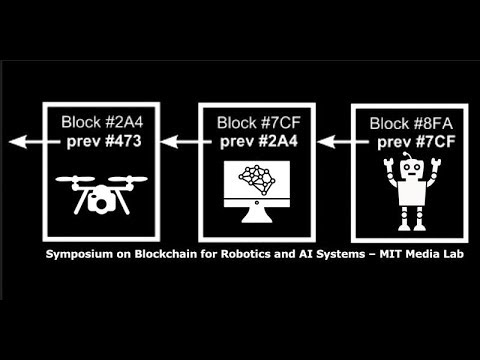
AI News, BOOK REVIEW: Digital Technologies Case Studies: AI, IOT, Robotics, Blockchain ... artificial intelligence
The next-generation supply chain market: $75B by 2030
The lure of low-cost data storage and cloud computing has enabled organizations to capture and process large volumes of data in a short period of time, finding valuable business insights and achieving end-to-end digitization of the supply chain.
For example, under its “Strategy 2025” plan, Deutsche Post DHL Group is spending around €2 billion on digitalization until 2025, with the investment expected to lead to yearly benefits of at least €1.5 billion by 2025.
Enablers of the digital supply chain include artificial intelligence, robotics and automation, driverless vehicles and drones, IoT, augmented and virtual reality, 3D printing, cloud computing, big data and predictive analytics, data capture, digital twin, blockchain, 5G connectivity, and wearable and mobile devices.
The major drivers of a digital supply chain include demand for greater visibility and transparency in the data process, faster adoption of IoT, increasing investment in supply chain innovation, and huge demand from e-commerce.
MONDAY, 31 MAY 2021
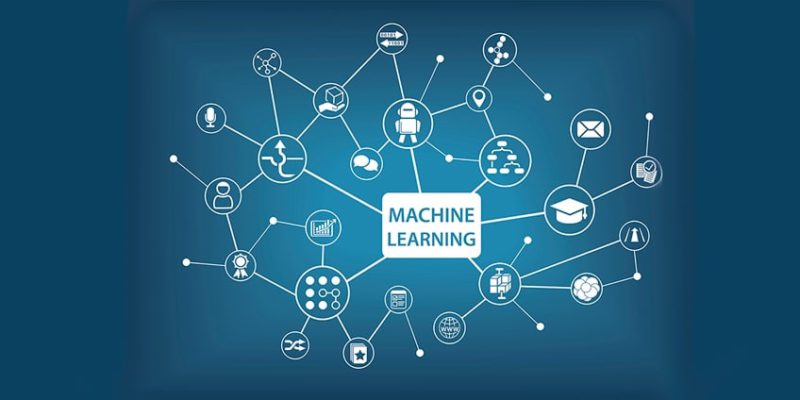
AutoML: In depth Guide to Automated Machine Learning [2021]
Automated machine learning (AutoML) has the potential to increase the productivity of data scientists significantly and democratize machine learning tools. According to Gartner, more than 40% of data science tasks will be automated by 2020. As the need for data scientists is increasing, autoML tools/services become more popular and help companies use machine learning successfully to extract business insights in an effective and scalable manner. It can be a powerful solution to the well documented scarcity of data scientists.
MONDAY, 31 MAY 2021
Top AI Use Cases in 2020
Artificial intelligence has been a promising field in recent years, and despite the disruption 2020 has delivered, the opportunities around AI show no sign of losing their momentum. Though this technology can benefit a wide range of business sectors, developers should give three AI use cases, in particular, a closer look.
“I see promising opportunities for AI across a wide variety of sectors, but especially in higher education, healthcare, and financial services,” says Capacity CEO David Karandish.

MONDAY, 31 MAY 2021
What is AR, VR, MR, XR, 360?
Virtual Reality (VR) started to make its way into mainstream conversations a couple years ago and the industry is advancing quickly. Keeping up with the terms and acronyms can be daunting. To help keep you in the loop, we’ve created a glossary of terms extending across the immersive technology spectrum from AR to XR.

MONDAY, 31 MAY 2021
World e-government leaders based on E-Government Development Index (EGDI) in 2020(index rating)
Over recent years, the presence of online government services has become increasingly common. In 2020, Denmark was ranked first with a near-perfect E-Government Development Index (EGDI) rating of 0.9758. The EGDI assesses e-government development at a national level and is based on three components: online service index, telecommunication infrastructure index and the human capital index.

MONDAY, 31 MAY 2021
The Role of E-Governance in Combating COVID-19 and Promoting Sustainable Development: A Comparative Study of China and Pakistan
This study’s aim is to investigate the role of e-governance in combating COVID-19 by integrating the implications of the China–Pakistan Economic Corridor (CPEC). We discuss and analyze the E-Government Development Index (EGDI) reports and rankings issued by the United Nations and big data implications during the COVID-19 pandemic. We used the Origin-pro 2018 application for the analysis and discussion. Overall, China’s EGDI ranking has improved from 74 to 65 out of 193 countries, while Pakistan’s ranking has gradually declined from 137 to 148. 5G and other big data technology and e-governance implications have helped to combat the COVID-19 pandemic. In this pandemic scenario, sustainable socioeconomic development in Pakistan needs significant improvement, similar to what has been done by China. We conclude that CPEC can help combat the COVID-19 pandemic because both countries are working together to mitigate social and economic problems. Pakistan should adapt and learn from the Government of China’s experience of successful and proficient e-governance model of technological advancement. This effort will ensure successful CPEC regional extension and help combat the COVID-19 pandemic to ensure Pakistan’s sustainable development.

MONDAY, 31 MAY 2021
Accelerated digital government
The COVID-19 pandemic has accelerated—in some cases, by years—the advent of truly digital government.
Prior to the pandemic, governments around the world had been making digital advances, although at an uneven pace. While some had made significant progress, others were still in the early stages of digital transformation. The risk of being “less than perfect” was slowing the transition to digital in many jurisdictions.
When the global pandemic hit, everything changed. Digital was no longer a “nice to have” for government, but an imperative. Consider digital government’s most compelling features: its ability to serve efficiently, scale cheaply, and adapt quickly. The disruption of the pandemic made these features more vital than ever.